Buying a Franchise: Pros and Cons
Explore the pros and cons of buying a franchise in our detailed guide. Discover if franchising suits your goals, considering benefits, costs, and risks involved.

Buying a franchise can be a tempting option for aspiring entrepreneurs. It offers a chance to own a business with a proven model. But is it the right choice for you?
Franchising provides a structured path to business ownership. It combines the independence of entrepreneurship with the support of an established brand. This can be appealing to many.
However, buying a franchise comes with its own set of challenges. Initial costs and ongoing fees can be significant. Plus, franchisees often face strict operational guidelines.
Understanding the pros and cons is crucial. It helps you make an informed decision. This article will explore these aspects in detail.
We'll discuss the benefits and drawbacks of franchising. You'll learn about the support systems and potential risks involved. By the end, you'll have a clearer picture of whether franchising suits your goals.
Summary
Buying a franchise offers a structured path to business ownership with a proven model, brand recognition, and training and marketing support that can reduce startup risk. The tradeoffs include high initial and ongoing fees, limited flexibility due to strict guidelines, and dependence on the franchisor’s performance and reputation. This article explains how franchising works, the key advantages and challenges, and provides steps to assess fit and conduct due diligence. Use these insights to decide whether franchising aligns with your goals and risk tolerance.
What Does It Mean to Buy a Franchise?
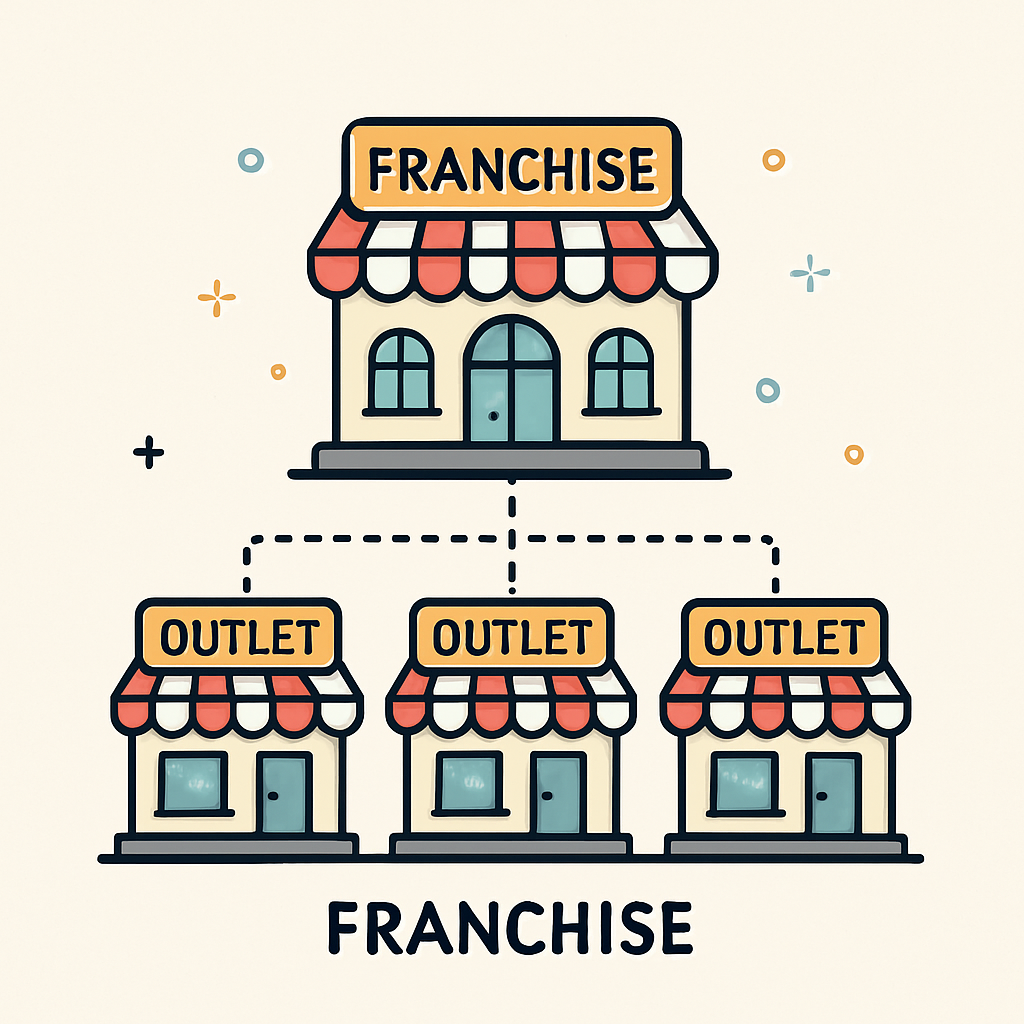
Buying a franchise involves purchasing the rights to operate a business under an established brand. It's like renting a business model with the brand's backing. Franchisees gain access to proven systems and products.
In return, franchisees follow set procedures and pay ongoing fees. These fees include a share of profits or sales. They help maintain quality and brand consistency.
Here's what a franchise purchase typically includes:
- Rights to use the brand name
- Access to the business's products or services
- Operational support and training
How Franchising Works: The Basics
Franchising is a popular way to expand a business model. It enables franchisees to operate their businesses under the brand umbrella. This involves a contractual agreement between the franchisor and the franchisee.
The agreement details the rights and obligations of both parties. Franchisees must adhere to specific operational guidelines. These guidelines ensure uniformity and uphold the brand's standards.
Franchisees benefit from:
- Training and support from the franchisor
- Established systems and procedures
- Marketing and advertising strategies
By following these standards, franchisees contribute to the brand's overall success.
What Are The Advantages of Buying a Franchise
Why buy a franchise business? There are key advantages and benefits.
Key Advantages of Buying a Franchise
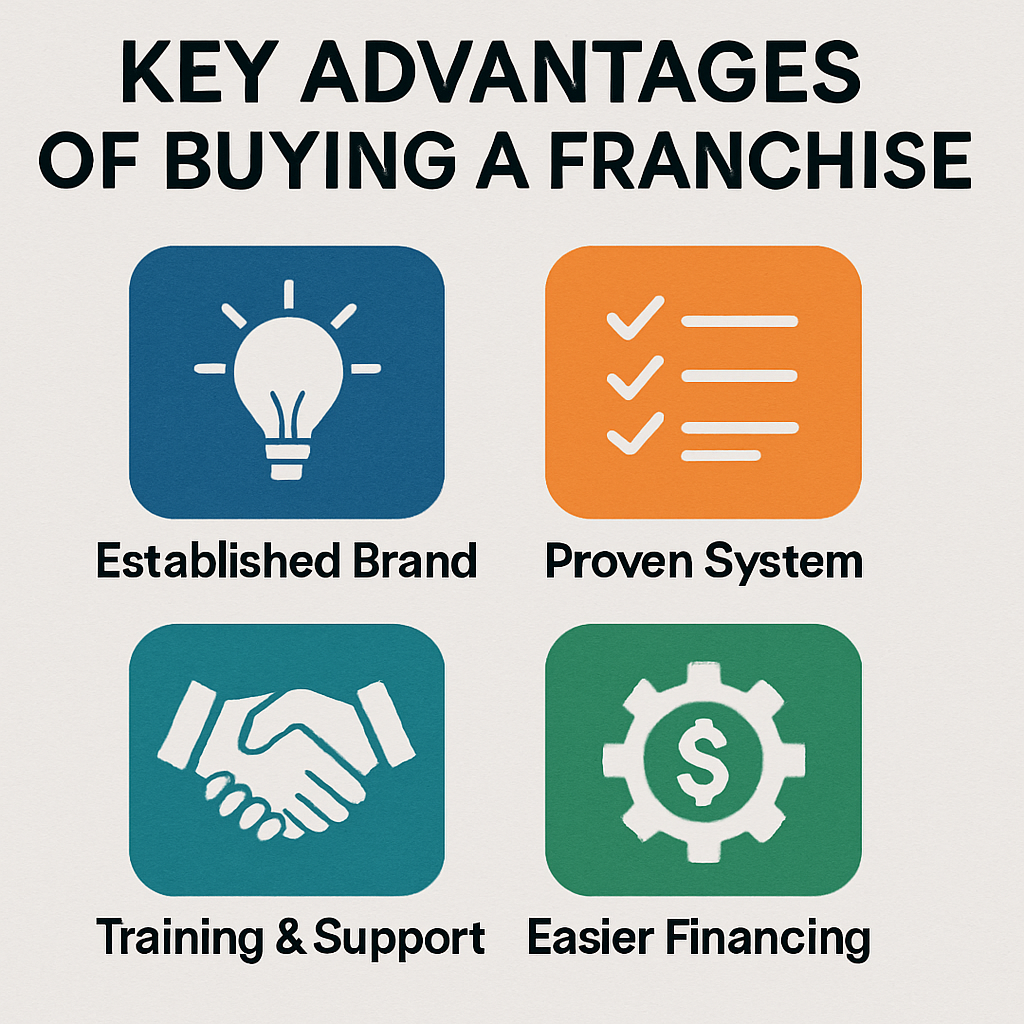
When considering buying a franchise, several advantages emerge. Franchises offer a structured path to business ownership. This path can simplify entering the market.
Franchisees enjoy a proven business model. This model has been tested and refined by the franchisor. Consequently, it often leads to faster success.
Another advantage is brand recognition. Established brands come with built-in customer loyalty. This reduces the need for extensive local marketing efforts.
Franchisees can also rely on comprehensive training programs. Such programs help them understand day-to-day operations. Ongoing support ensures their continued success.
Access to national marketing campaigns is another perk. These campaigns boost visibility and attract customers. Franchisees benefit without bearing the full cost.
Moreover, buying a franchise often means lower risk. This is largely due to the success of the parent brand. Franchises typically see a lower rate of failure compared to independent startups.
Finally, franchisees can share ideas with a network of other franchise owners. This community offers valuable advice and support. The sense of belonging can be both motivating and encouraging.
What are the benefits of buying a franchise?
Proven Business Model and Brand Recognition
The franchise model provides a tried-and-true business framework. This framework is built on the franchisor's success stories.
Franchisees benefit from:
- Established brand identity
- Customer trust and loyalty
- Proven marketing strategies
Established franchises are often a familiar sight in communities. Customers recognize and trust these brands quickly. This recognition can lead to higher initial sales for franchisees.
What is an advantage of buying a franchise?
Training, Support, and Marketing Assistance
Franchisees receive robust training programs from franchisors. This support equips them for efficient business operations. Initial training is complemented by ongoing assistance.
Support includes:
- Detailed operational training
- Access to marketing strategies
- Tailored business advice
Franchisors provide marketing assistance to boost brand visibility. This helps franchisees save on advertising costs. Franchisees benefit from national campaigns and promotions.
Additionally, support ensures franchisees follow company standards. This support can be crucial in maintaining quality and customer satisfaction. It builds consistency across all franchise locations.
Lower Failure Rate and Reduced Risk
Franchises often have a lower failure rate. This is due to established business practices and brand strength. The parent company usually has a successful track record.
Advantages include:
- Reduced startup risks
- Guidelines for successful operations
- Increased chance of long-term viability
Entering an existing network means fewer unknown variables. Franchisees have access to experienced advice. This advice helps navigate challenges effectively.
In conclusion, the franchise model reduces risk. This appeals to those seeking security in business ventures. For many, franchising is a safer route to entrepreneurship.
The Cons: Challenges and Risks of Franchise Ownership
We can't discuss the pros and cons of buying a franchise without including the drawbacks.
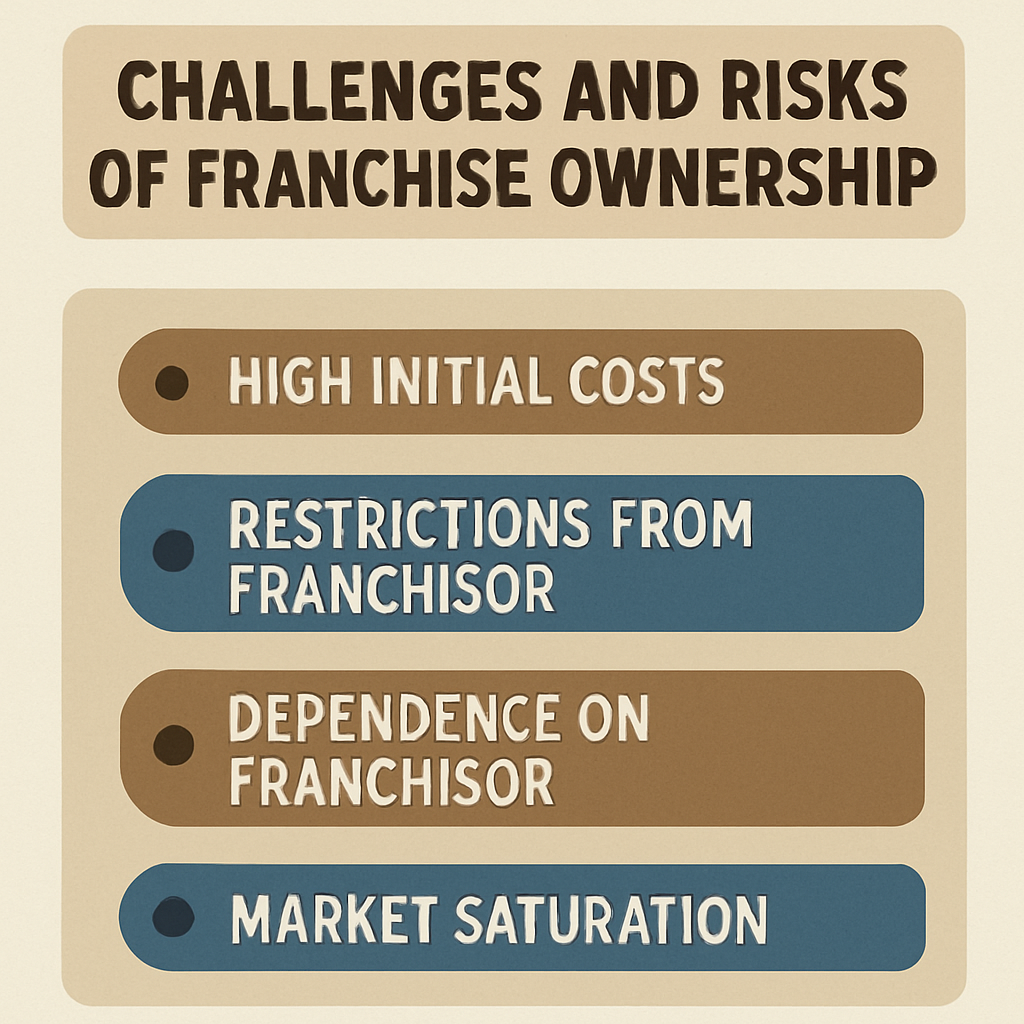
Owning a franchise comes with its set of challenges. These challenges can affect decision-making and operations. Prospective franchisees must weigh these carefully.
One significant concern is the financial burden. Franchises often require a high initial investment. Additionally, ongoing royalty fees are typically mandatory.
These financial commitments can impact profitability. Franchisees should budget meticulously to cover all costs. Unanticipated expenses may arise, straining resources further.
Operational guidelines can also limit flexibility. Franchisors impose these to maintain brand consistency. This can restrict a franchisee's creative input.
Moreover, reliance on the franchisor for critical support is inevitable. Any dip in the franchisor's reputation can impact the franchise negatively.
The success of your franchise is often tied to the parent brand. Therefore, any negative publicity faced by the brand affects all franchisees. This could lead to reduced customer traffic and sales.
Understanding these potential pitfalls is crucial. Prospective franchisees should conduct thorough research. Making an informed decision can mitigate some of these risks.
High Initial Investment and Ongoing Fees
Starting a franchise requires considerable upfront capital. This capital covers franchise fees, real estate, and equipment. The financial commitment is much higher than some other business ventures.
Ongoing fees include:
- Royalties paid to franchisor
- Advertising contributions
- Operational expenses
These costs are necessary for sustaining the franchise. However, they can quickly add up and affect cash flow. Prospective franchisees must plan their finances carefully.
Limited Flexibility and Creative Control
Franchisees operate under strict guidelines. Franchisors set these to ensure uniformity across locations. This limits individual input into business operations.
Controlled areas often include:
- Product offerings
- Store layout
- Marketing strategies
Such restrictions may hinder innovation. Franchisees must be ready to follow pre-set rules. Flexibility is limited to maintain brand consistency across the board.
Dependence on Franchisor and Brand Reputation
Franchisees rely heavily on their franchisor. Their success is intertwined with the franchisor's performance and strategies. This dependence can pose risks.
Potential issues include:
- Mismanagement by franchisor
- Brand scandals
- Inadequate franchisor support
Any negative development can reverberate across the franchise network. Franchisees are tasked with managing the fallout locally. This dependency can sometimes lead to uncertainty and instability.
Which Statement About Buying a Franchise Is Most Accurate?
When considering a franchise, accuracy in understanding is key. One accurate statement is that buying a franchise reduces business risk. This is due to the established systems and support provided by the franchisor.
Key facts supporting this include:
- Proven business model exists
- Established brand recognition helps
- Franchisor provides training and guidance
These elements collectively lower failure risk compared to independent startups. The established brand attracts customers more easily. Additionally, the franchisor's ongoing support helps navigate challenges effectively.
Thus, franchise ownership combines risk reduction with systematic support. However, it's important to balance these advantages with potential drawbacks.
How to Decide: Is Buying a Franchise Right for You?
Deciding to buy a franchise is a significant decision. Carefully evaluate your goals and preferences. Consider whether you value support over independence.
Reflect on these questions:
- Do you prefer existing structure or want creative freedom?
- Are you comfortable with financial commitments and fees?
Understanding your personal and financial situation is vital. Ensure alignment between your aspirations and what franchising offers. The advantages include support and a lower risk of failure.
Assess these factors:
- Your ability to follow guidelines
- The brand's market presence in your area
Research the franchise thoroughly. Consider market demand for the brand's product or service. Seek advice from current franchisees. This can provide valuable insights.
A balanced approach helps make an informed decision. Take your time to analyze and decide carefully.
Essential Steps Before You Buy a Franchise
Before purchasing a franchise, research is crucial. Start by reviewing the Franchise Disclosure Document (FDD). This document offers critical details about the franchise.
Conduct thorough due diligence. Assess the franchisor's history and financial health. Seek legal and financial advice to understand all contract implications.
Consider these steps:
- Talk with current franchisees to gauge their experiences.
- Visit several franchise locations to observe operations firsthand.
- Evaluate the training and support programs offered.
Additionally, assess the competitive landscape. Determine the potential market demand in your area. Be sure you understand ongoing fees and financial commitments. These steps ensure you enter with eyes wide open. Careful preparation can lead to a successful franchising journey.
Final Thoughts: Weighing the Pros and Cons
Hopefully now you can answer a very common question: what is the advantage of buying a franchise?
In addition, you should have a much better understanding about buying a franchise pros and cons.
Buying a franchise offers both exciting opportunities and considerable challenges. The structure can provide a safer path for new entrepreneurs. Established systems and brand recognition are powerful tools.
However, financial commitments and limited autonomy can be daunting. The need for alignment with franchisor policies may restrict creativity. These are vital factors to consider before committing.
Ultimately, success hinges on thorough research and careful evaluation. Assess your goals and willingness to work within a predefined system. By weighing these elements, you can make a more informed decision. Franchising might just be the right path for your entrepreneurial journey.